LAMBORGHINI CAR PRICE IN PAKISTAN 2026
When Ferruccio Lamborghini built his first tractor in 1948, he couldn’t have imagined his name would become synonymous with “impossible.” For decades, the Raging Bull has been more than a car manufacturer—it is a cultural phenomenon that redefined what a supercar could be. In an era where automakers chase hybridization, autonomous driving, and digital minimalism, Lamborghini has done the unthinkable: they have doubled down on drama.
From the revolutionary Miura (the world’s first supercar) to the hybrid V12 behemoth Revuelto, Lamborghini has redefined performance, design, and even the business of luxury. This is not just a story of speed. It is a story of how one brand taught the world that a car should be a sculpture, a symphony, and a rebellion against aerodynamic conformity.
The Three Pillars of Lamborghini’s Redefinition
How exactly did Lamborghini break the mold? While Ferrari focused on racing pedigree and Porsche on engineering precision, Lamborghini focused on visceral emotion. They redefined three core areas:
- Design Language: Low, sharp, and aggressive. Lamborghini proved that a car’s silhouette matters more than its drag coefficient.
- Powertrain Innovation: From the mid-engine layout to today’s hybrid V12s, they balance insanity with inevitability.
- User Experience: The “Super SUV” (Urus) redefined the brand from a weekend toy to a daily titan.
Here is a detailed breakdown of how the current lineup represents this redefinition.
Table 1: Current Lamborghini Lineup – Features & Starting Prices
| Model | Powertrain | Horsepower | 0-60 mph | Key Feature | Starting Price (USD) |
|---|---|---|---|---|---|
| Revuelto | 6.5L V12 Hybrid | 1,001 hp | 2.4 sec | First HPEV (High Performance Electrified Vehicle) V12 | $604,000 |
| Huracán Sterrato | 5.2L V10 | 602 hp | 3.4 sec | Off-road raised suspension & roof scoop | $275,000 |
| Huracán Tecnica | 5.2L V10 | 640 hp | 3.2 sec | Rear-wheel drive with telemetry systems | $240,000 |
| Urus Performante | 4.0L Twin-Turbo V8 | 666 hp | 3.3 sec | Lightweight carbon fiber & rally mode | $260,000 |
| Urus S | 4.0L Twin-Turbo V8 | 657 hp | 3.5 sec | Luxury executive super SUV | $235,000 |
Note: Prices exclude destination charges, taxes, and personalization via Ad Personam program.
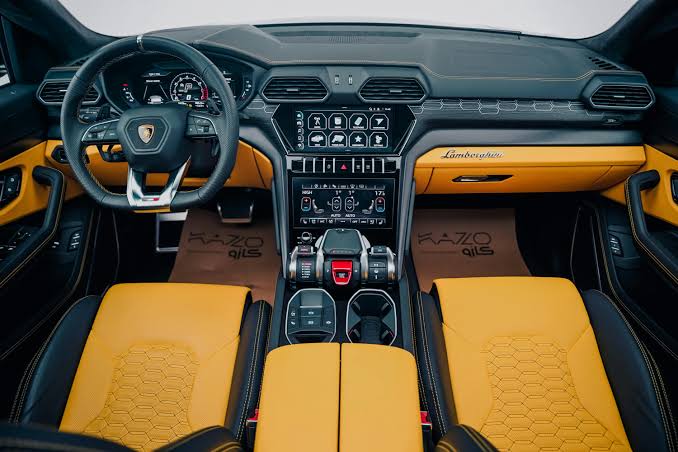
Feature Deep Dive: The “Redefinition” Factors
Let’s look at three specific models that changed the game.
1. The Revuelto: V12 Electrified (The Future is Loud)
When Lamborghini announced the Aventador’s successor would be a hybrid, purists panicked. They expected a Prius with scissor doors. Instead, they got the Revuelto. It redefines hybridization by placing the electric motors not to save fuel, but to fill the torque gaps. The result is a naturally aspirated V12 that screams to 9,500 RPM while a front e-axle provides instant launch traction. The redefinition? Performance without penance.
2. The Huracán Sterrato: Dune Bashing with Italian Loafers
Lamborghini redefined the “supercar” category by changing its geography. The Sterrato is a lifted, V10-powered off-roader with roof scoops and rally lights. It asks the question: Why should a supercar be limited to tarmac? With bespoke Bridgestone Dueler tires and “Rally” drive mode, it slides on gravel with the same precision it corners on asphalt.
3. The Urus: The Profitable Bull
Before the Urus, Lamborghini sold roughly 2,500 cars a year. Post-Urus, they doubled that overnight. The Urus redefined the business of Lamborghini. It shares a platform with the Porsche Cayenne and Audi Q8, but through aggressive flares, a snarling V8, and that Y-shaped DRL signature, it feels uniquely Sant’Agata. It proved that utility does not require sacrificing identity.
Full Technical Specifications & Performance Metrics
For the engineers and track-day enthusiasts, here is the deep data on what makes these bulls run. Note that all figures are manufacturer estimates for the current US/European specification models.
Table 2: Technical Specifications Comparison
| Specification | Revuelto (V12 Hybrid) | Huracán Tecnica (V10) | Urus Performante (V8) |
|---|---|---|---|
| Engine Type | L545 6.5L NA V12 | 5.2L V10 (DOHC) | 4.0L Twin-Turbo V8 |
| Total System Torque | 538 lb-ft (ICE) + Electric | 417 lb-ft | 627 lb-ft |
| Transmission | 8-speed DCT (Double-clutch) | 7-speed DCT | 8-speed Tiptronic |
| Drivetrain | Electric AWD (Rear-wheel drive optional) | Rear-wheel drive | Permanent AWD with rear torque vectoring |
| Weight | 3,905 lbs (Dry) | 3,049 lbs (Dry) | 4,850 lbs (Dry) |
| Top Speed | 217 mph | 202 mph | 190 mph (limited) |
| Fuel Economy (est.) | 12 MPG city / 18 highway | 13 MPG city / 18 highway | 14 MPG city / 19 highway |
| Luggage Capacity | Frunk: 6.2 cu ft | Frunk: 5.6 cu ft | Rear: 21.8 cu ft |
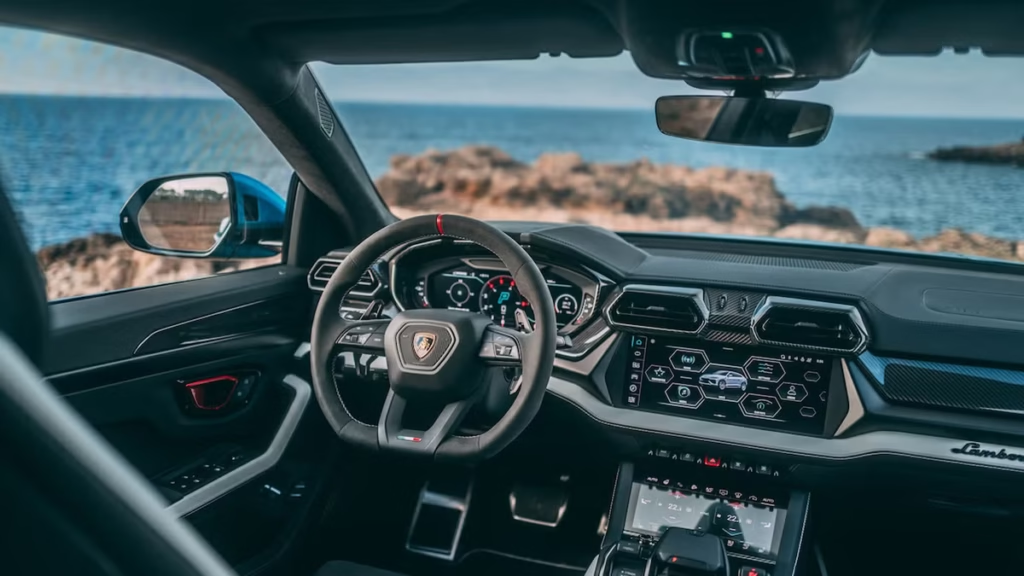
The Design Revolution: “Space Race” Aesthetics
Lamborghini redefined automotive design by rejecting the smooth, tear-drop shape favored by competitors. Instead, they pioneered the “ice cream sandwich” design: sharp, folded planes and hexagonal themes.
- The Y-Signature: Every modern Lamborghini features Y-shaped daytime running lights and taillights, mimicking the shape of a jet intake.
- The Countach Influence: Even the new Revuelto has a massive single center exhaust and floating fender blades, a direct nod to the 1974 Countach.
- Carbon Fiber Monocoque: Lamborghini was a pioneer in CFRP (Carbon Fiber Reinforced Polymer). The new “monofuselage” is lighter than aluminum but 40% stronger in torsion.
Why This Matters: The Legacy of “Unnecessary”
In a world moving toward electric sedans and autonomous ride-sharing, Lamborghini’s redefinition lies in their refusal to grow up. Their new hybrid systems don’t focus on zero emissions; they focus on zero lag. The infotainment systems are basic by Tesla standards because the screen is not the point. The point is the start-up roar of a V12 waking up at 7:00 AM, scaring the neighbors.
Lamborghini has redefined success by proving that irrational passion sells. They have successfully navigated the hybrid transition without losing their soul. The Revuelto, Sterrato, and Urus Performante are not just cars; they are the last bastion of analog drama in a digital world.
Final Verdict: Is the redefinition complete?
Yes. The Raging Bull is no longer just a track toy for the rich. It is a lifestyle brand that spans design, gaming (thanks to Forza/Need for Speed collaborations), and even luxury real estate. They have redefined the supercar from a fragile garage queen into a rugged, all-terrain, hybrid monster that just happens to look like a fighter jet.

Whether you are buying a 260,000Urusfortheschoolrunora260,000Urusfortheschoolrunora604,000 Revuelto for the canyon roads, one thing is certain: Lamborghini has ensured that the future of high-performance driving will be loud, sharp, and gloriously impractical.
Bonus Table: Lamborghini Ad Personam – Customization Price Ranges
Lamborghini redefined exclusivity with their Ad Personam program, allowing buyers to tailor everything from stitch color to brake caliper finish. Below is a sample pricing guide for popular upgrades (MSRP estimates).
| Customization Option | Material / Type | Price Range (USD) | Lead Time |
|---|---|---|---|
| Matte Paint | (e.g., Blu Glauco, Giallo Horus) | 15,000–15,000–25,000 | +3 months |
| Carbon Fiber Package | Hood, engine cover, diffuser | 20,000–20,000–45,000 | +2 months |
| Interior Leather Stitching | Contrast stitching (70+ colors) | 3,500–3,500–6,000 | +1 month |
| Forged Composite Wheels | Lightweight carbon fiber rims | 12,000–12,000–18,000 | +4 months |
| Branding Package | Headrest embroidered Lamborghini logo | 2,000–2,000–3,500 | Standard |
| Alcantara Roof Liner | Dinamica or Ultrasuede | 7,500–7,500–11,000 | +2 months |
| Special Brake Calipers | Fluorescent orange or custom hex color | 1,500–1,500–4,000 | Standard |